#
AI-Powered Bill Sentiment Analysis





BillsSentiments is an advanced AI-driven analytical dashboard built to tackle the challenge of manually analyzing thousands of public stakeholder comments on draft legislations.
GitHub: https://github.com/0xarchit/BillsSentiments
#
Overview
By leveraging Natural Language Processing (NLP), Large Language Models (LLMs), and Retrieval-Augmented Generation (RAG), this platform automates:
- Sentiment Analysis: Classifying feedback as Positive, Neutral, or Negative.
- Contextual Summarization: Generating concise summaries of lengthy legal texts.
- Semantic Search: Enabling "Chat to Document" functionality via Vector search.
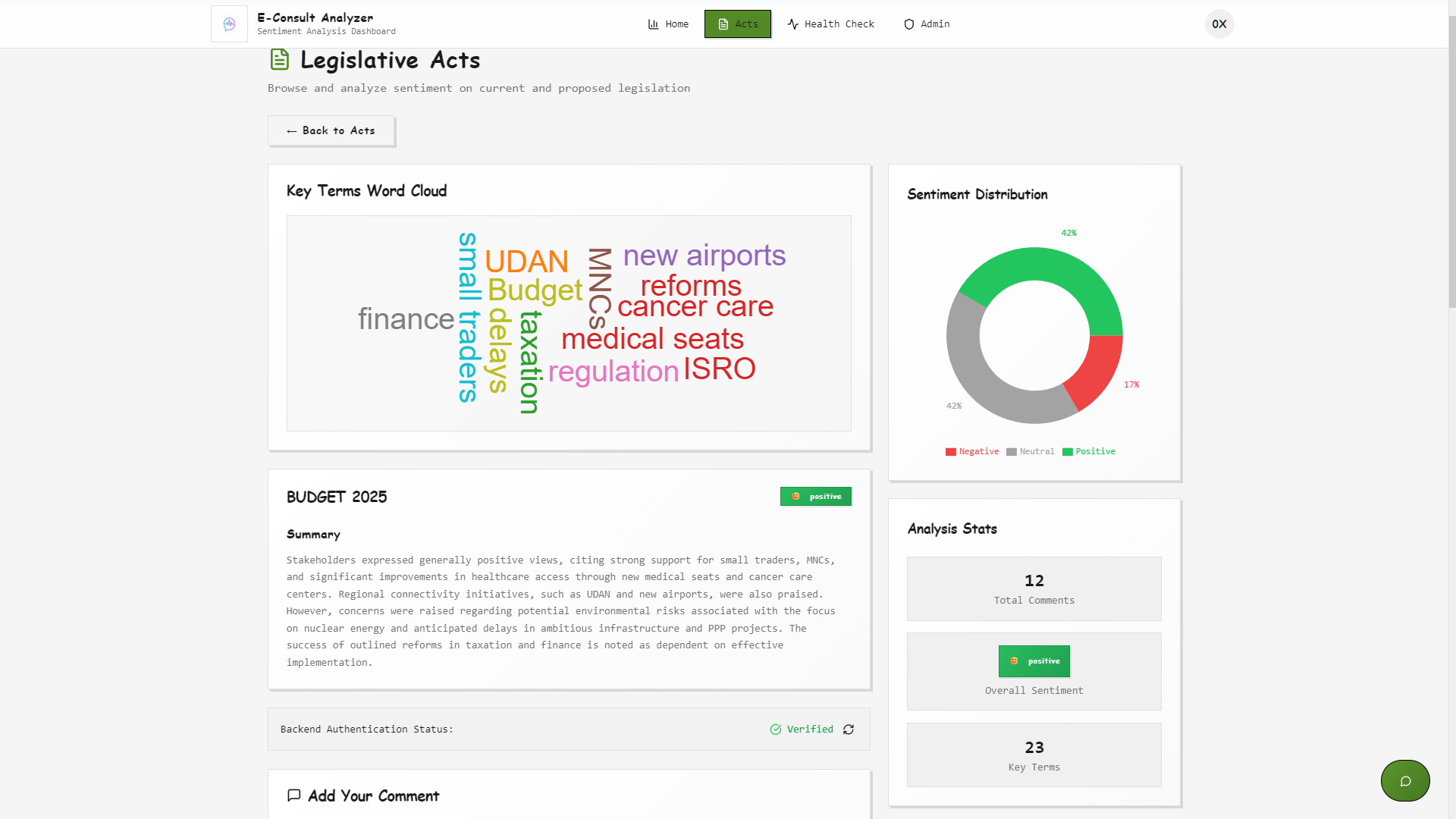
- Visual Analytics: Providing word clouds and statistical breakdowns for policy makers.
#
Input Data Example
The system analyzes complex legislative texts and diverse public comments.
#
System Architecture
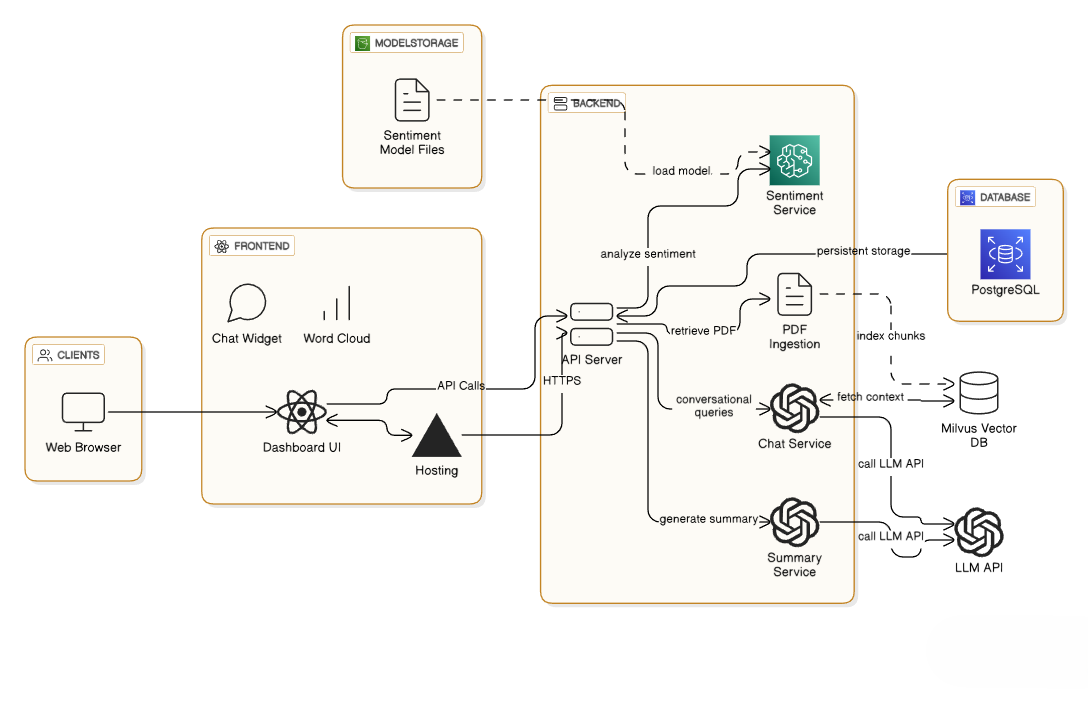
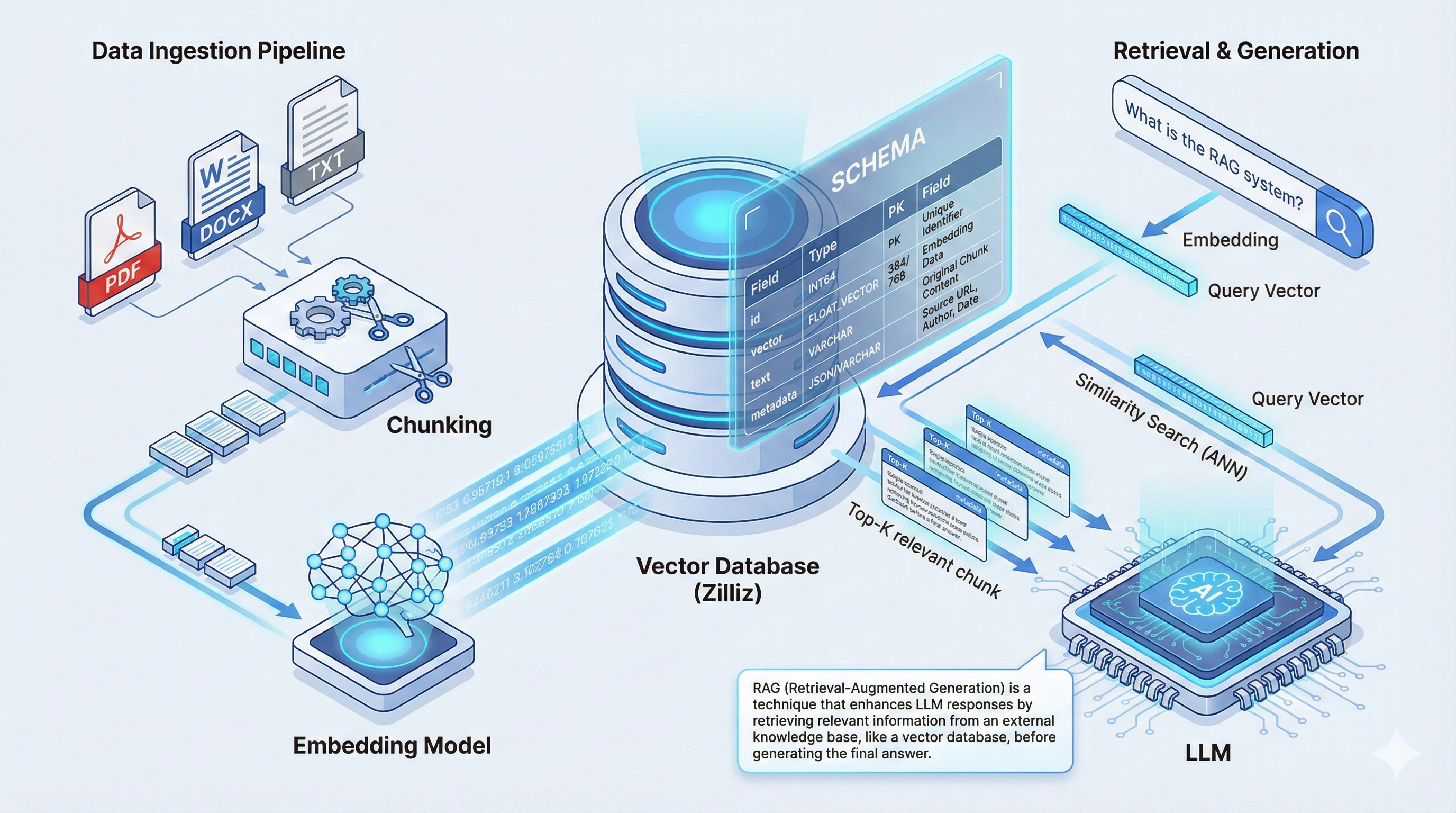
The system is built on a Microservices-inspired architecture, containerized with Docker for easy deployment. It features a FastAPI backend for heavy ML lifting and a sleek Next.js frontend for an immersive user experience.
#
Core Workflow
- Ingestion: Comments are uploaded (CSV) or fetched via API.
- Processing:
- Sentiment Engine: BERT-based model predicts sentiment scores.
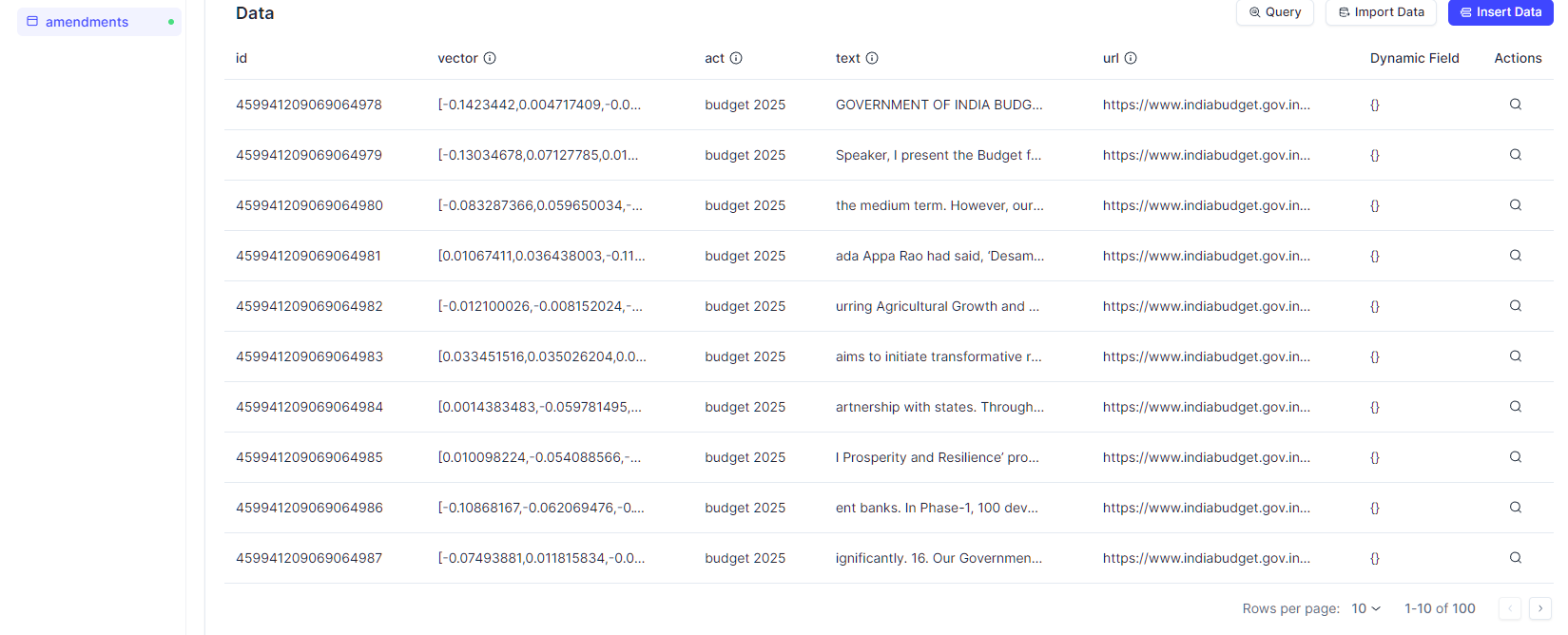
- Vectorization: Embeddings are generated and stored in Milvus (Zilliz) for RAG.
- Vector Storage: The Milvus vector database efficiently indexes these embeddings for rapid similarity search.
- Analysis: Gemini 2.5 Flash (via LangChain) generates summaries and answers RAG queries.
- Presentation: Results are displayed on a real-time Interactive Dashboard.
#
Key Features
#
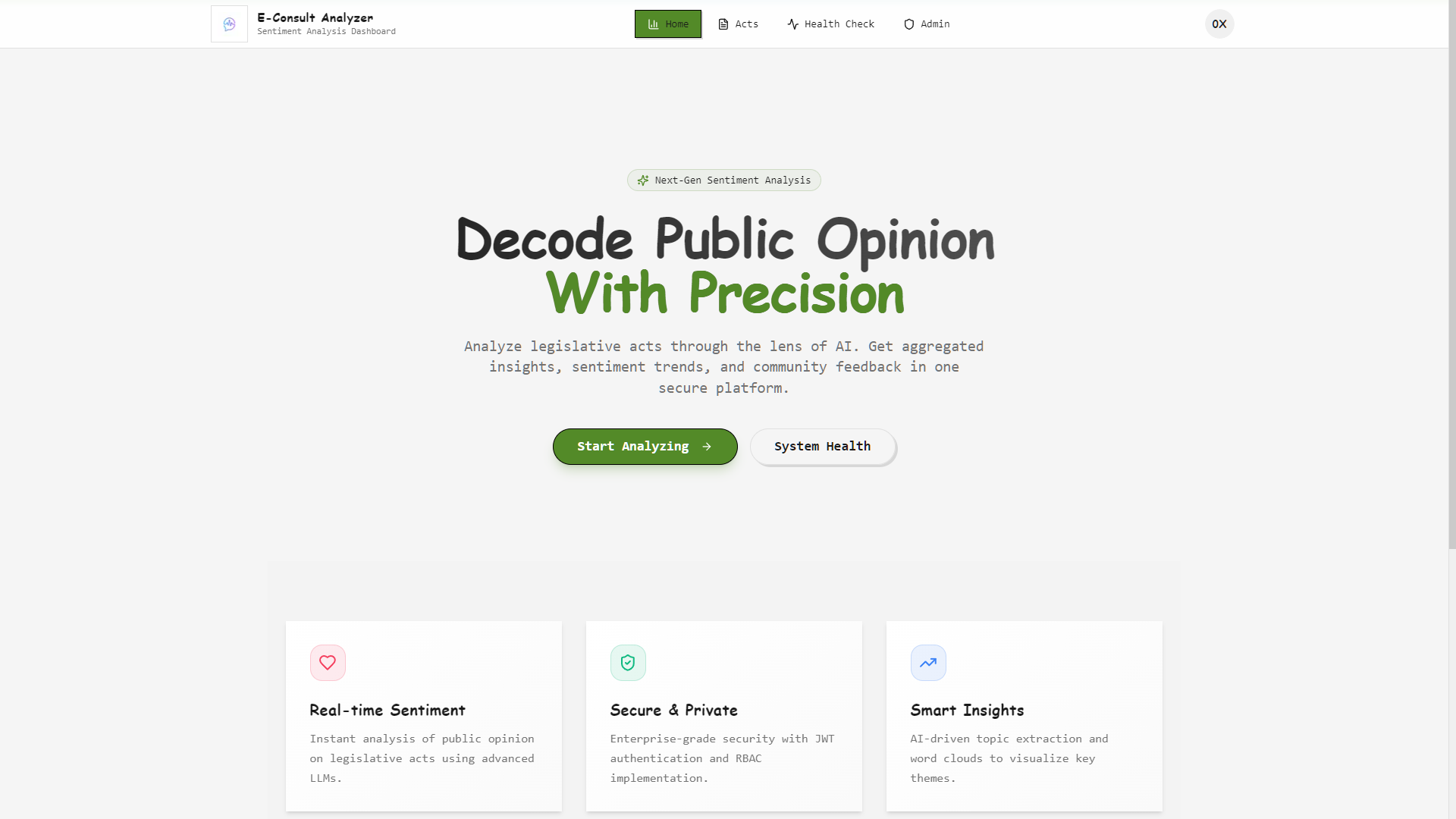
1. Interactive Dashboard
A modern, responsive UI showing real-time statistics, sentiment distribution, and recent activities.
#
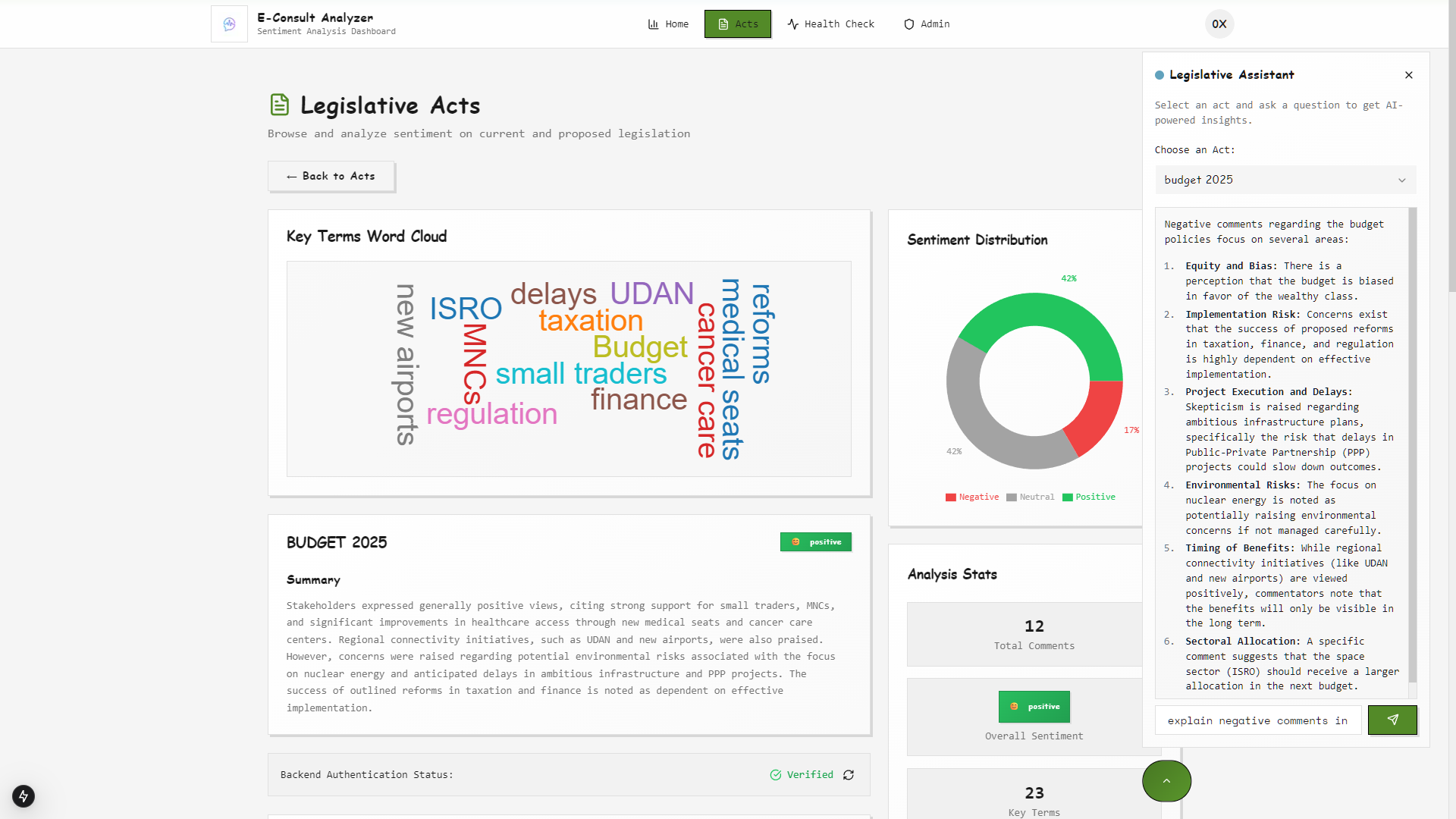
2. RAG-Powered Chatbot
Ask questions about specific legislative acts. The bot retrieves context from the official document PDFs and stakeholder comments to provide evidence-backed answers.
#
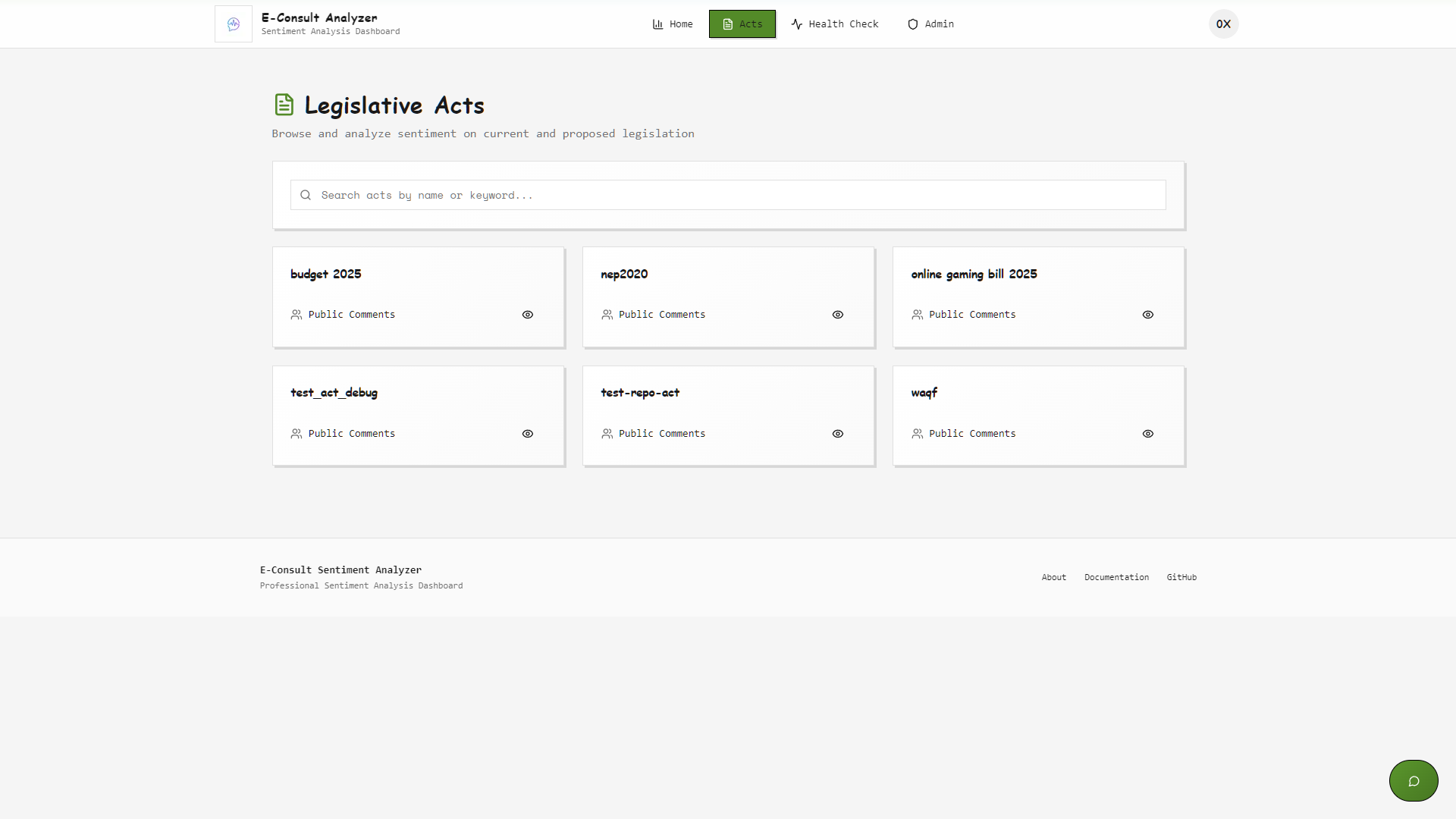
3. Automated Insight Generation
View overall sentiment trends and word clouds highlighting key topics of discussion for each act.
#
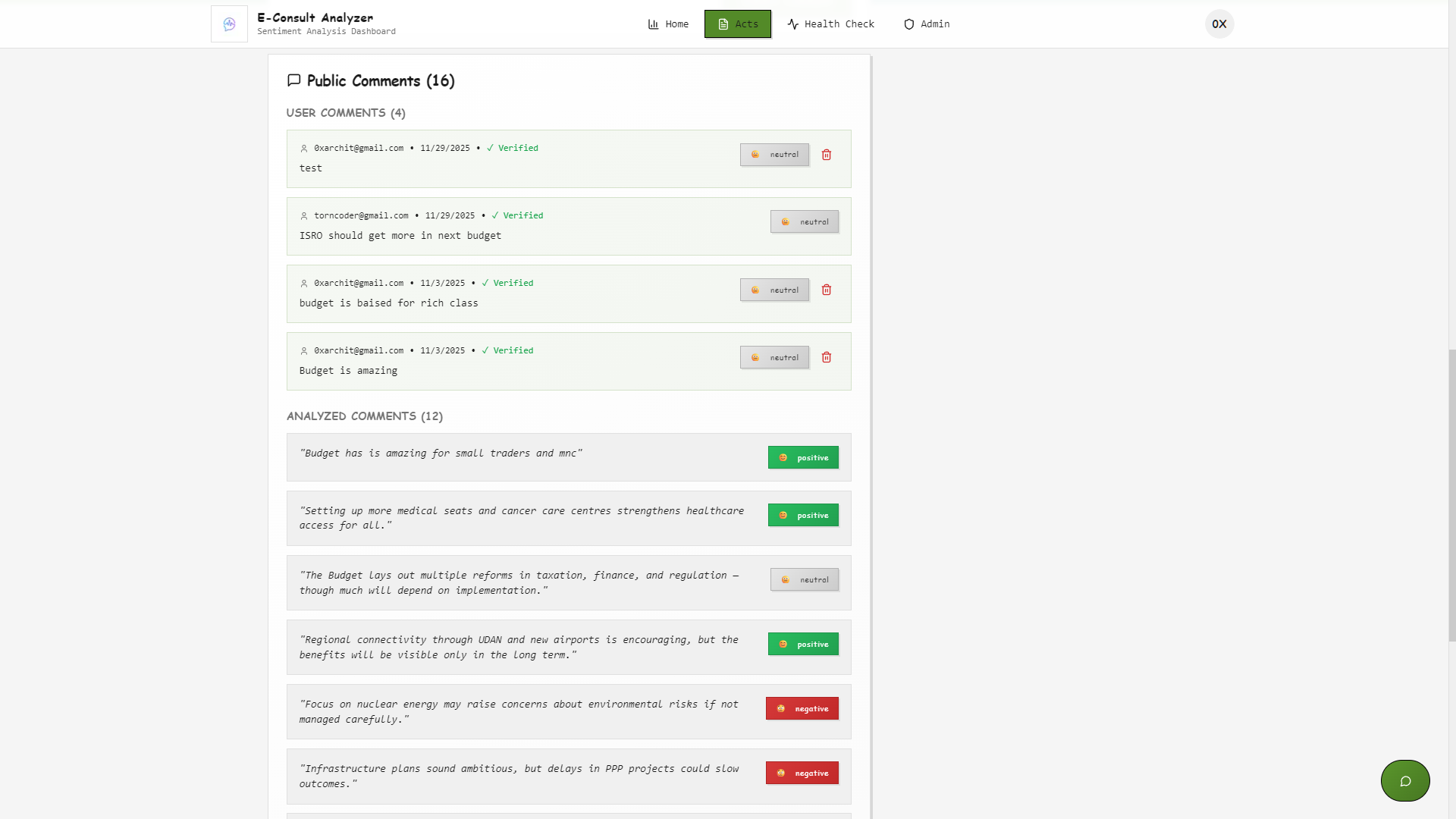
4. Detailed Comment Analysis
Drill down into individual comments with granular sentiment scoring and metadata.
#
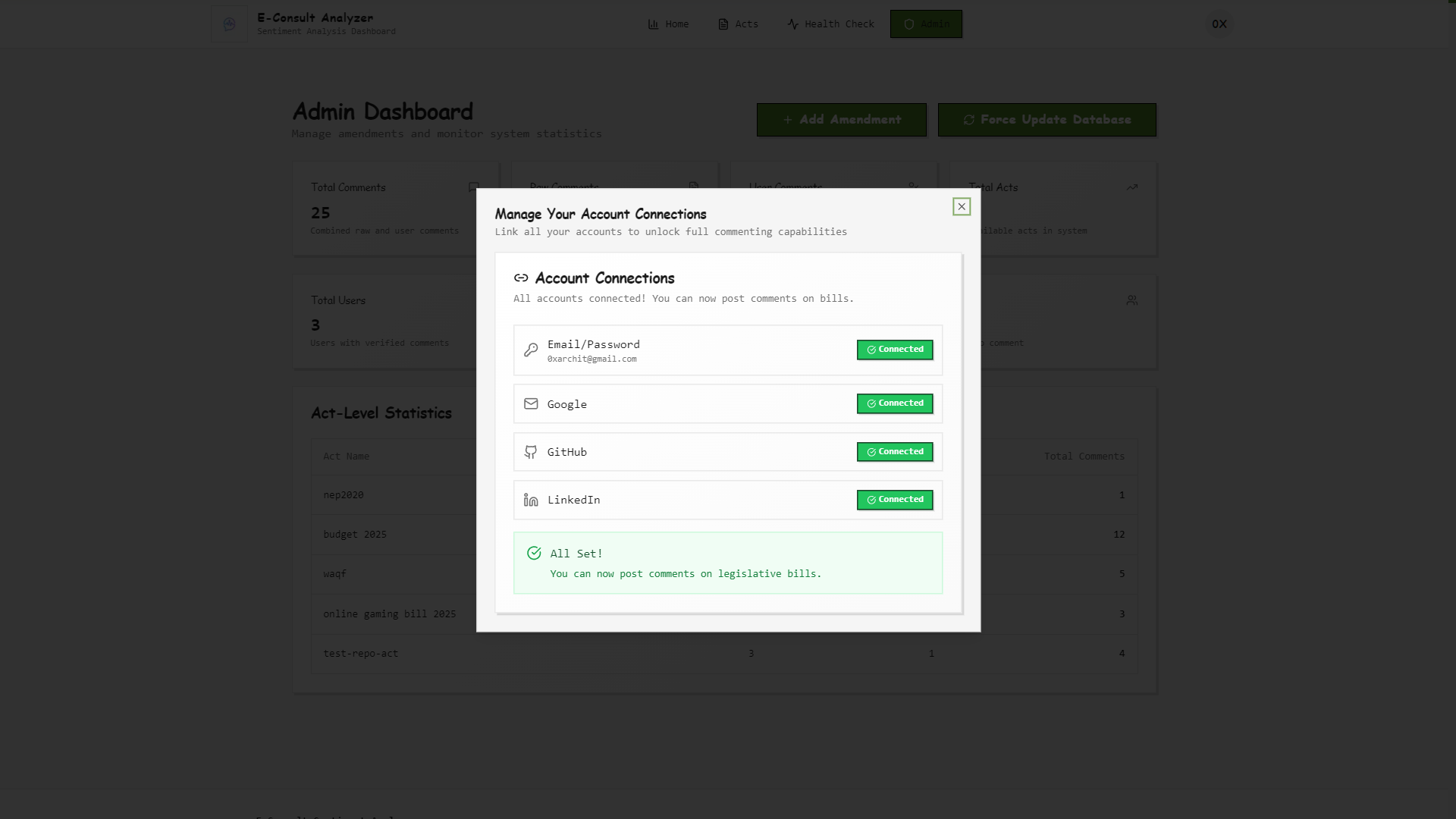
5. Secure Authentication
Robust user management and authentication system powered by Supabase.
#
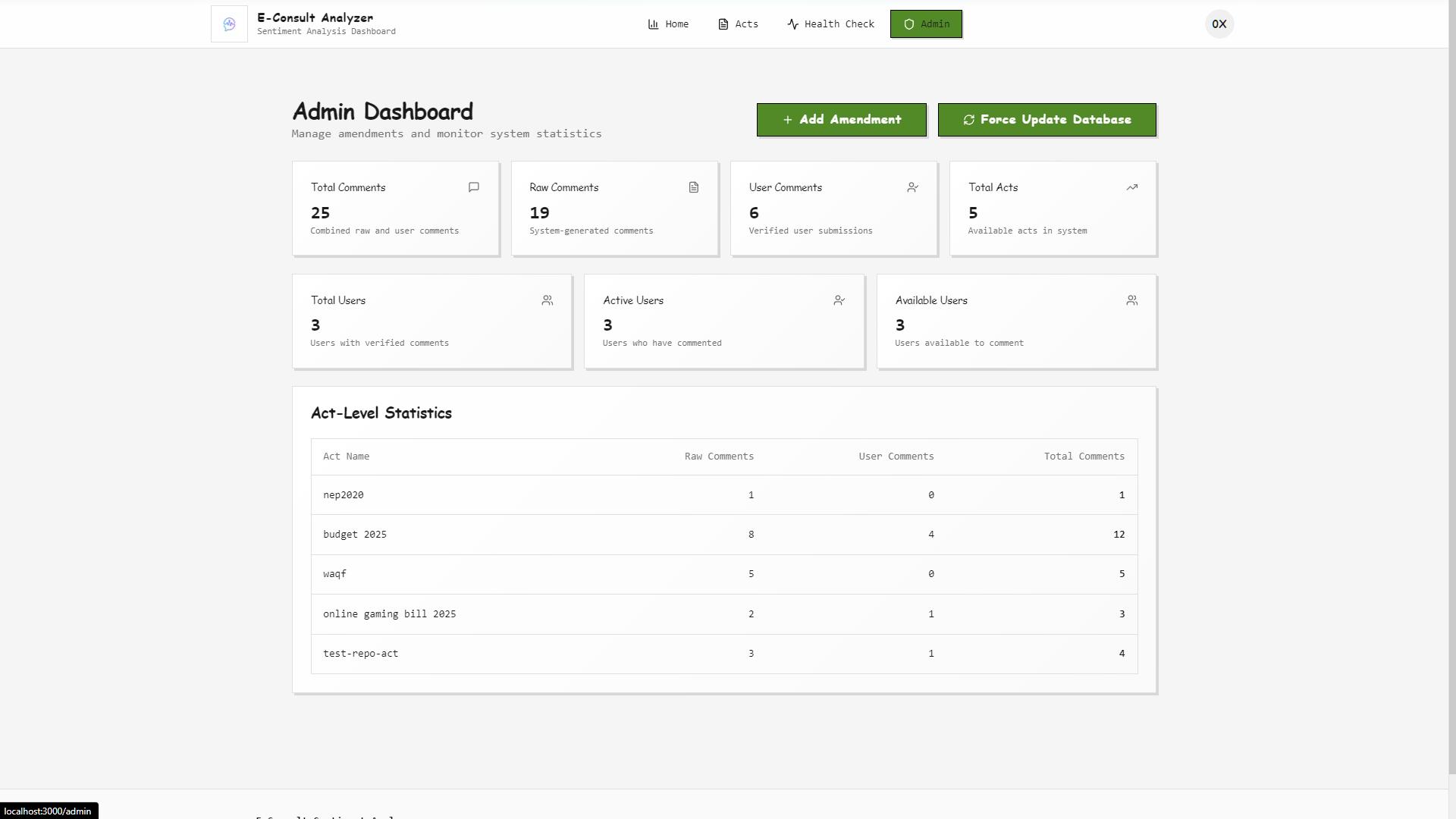
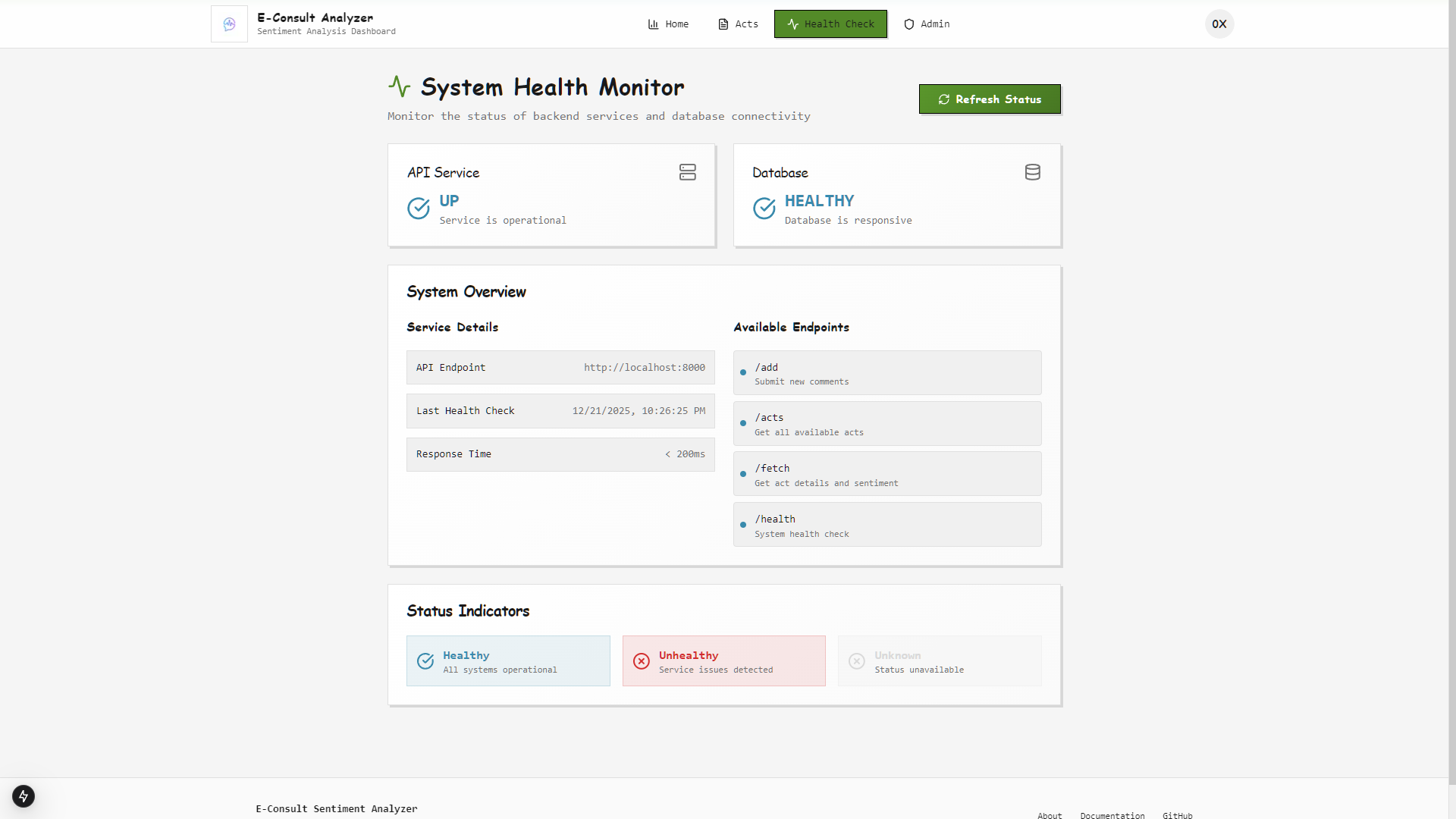
6. Admin & System Health
Role-based access control (RBAC). Admins can manage acts, trigger model updates, and monitor the health of all system components.
System Health Monitoring:
#
Tech Stack
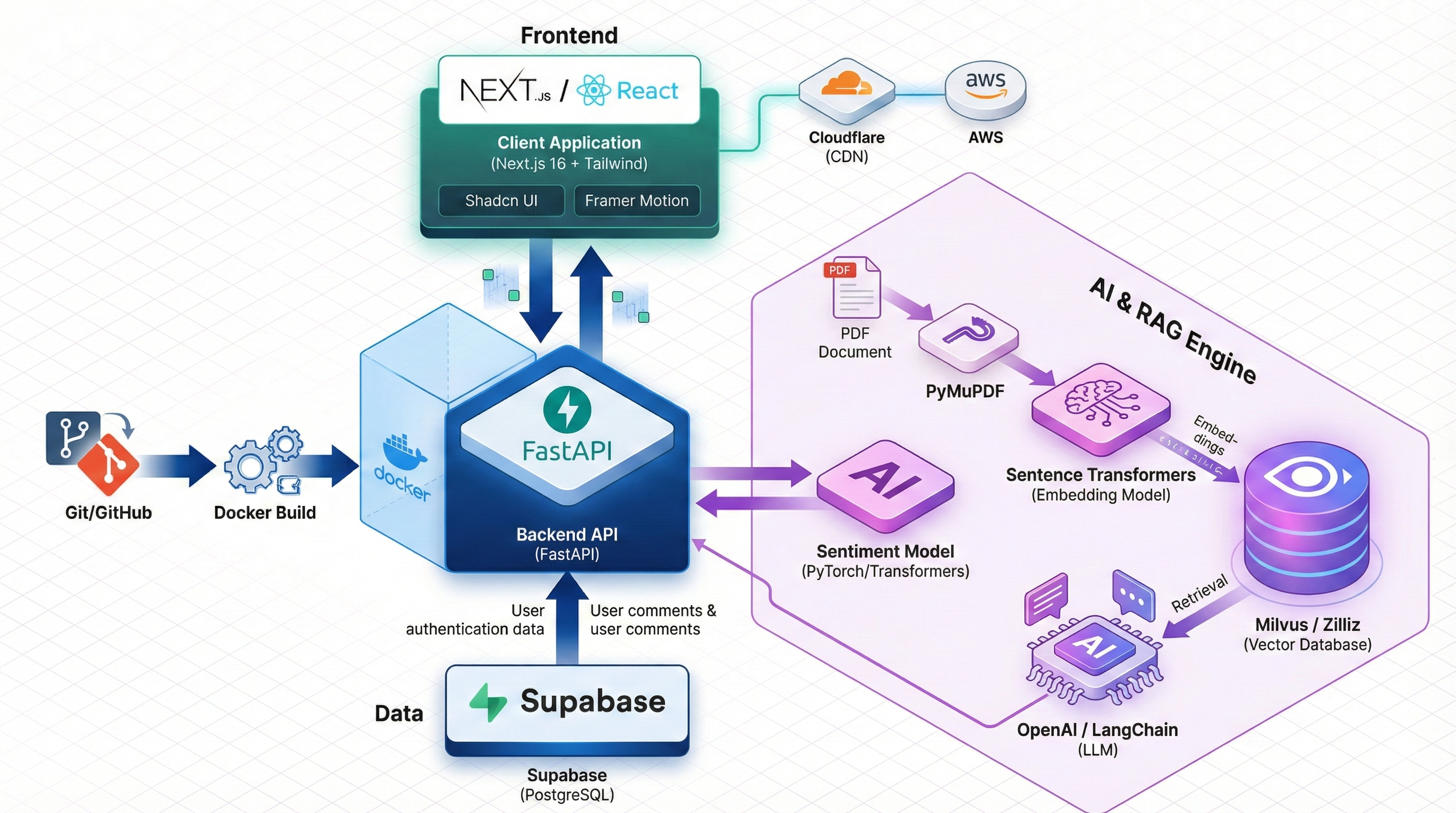
#
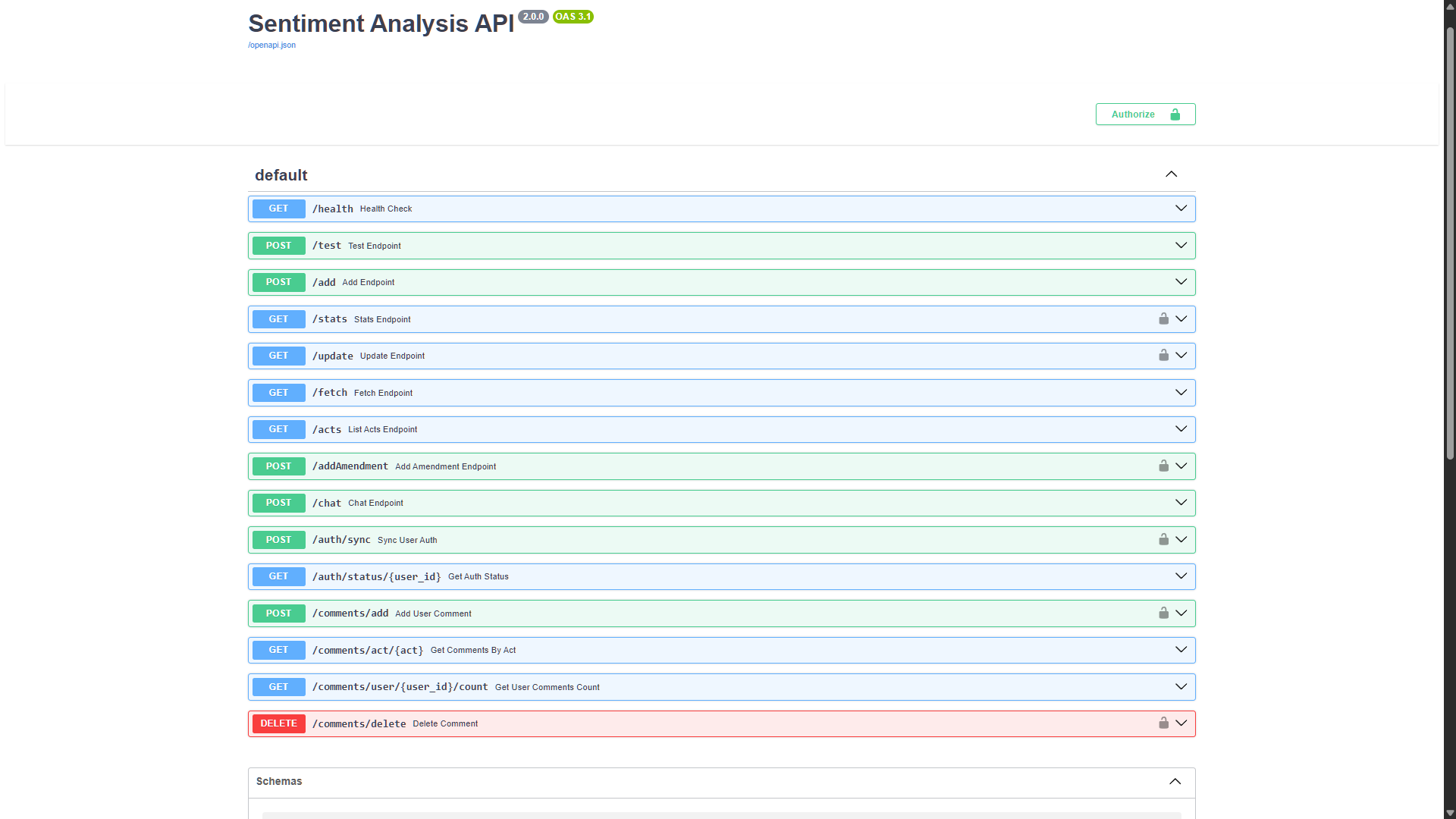
API & Database
The backend exposes a comprehensive REST API documented via Swagger UI.
#
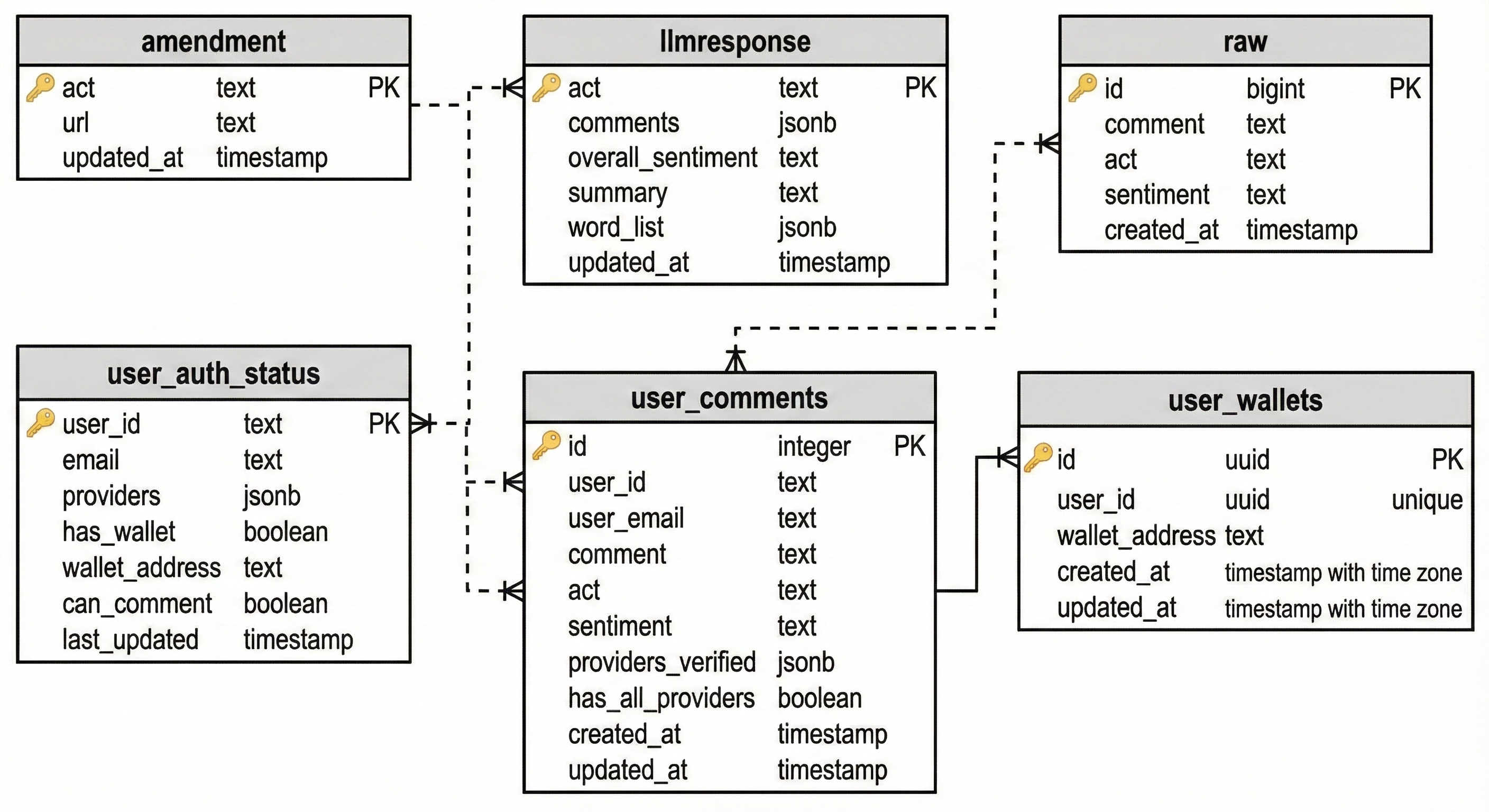
Database Schema
A robust relational schema handles Users, Acts, Comments, and Authentication states.
#
Getting Started
#
Option A: Docker (Recommended)
Deploy the entire stack (Frontend + Backend) with a single command. The backend is isolated internally, exposing only the frontend.
# 1. Clone the repository
git clone https://github.com/0xarchit/BillsSentiments.git
cd BillsSentiments

# 2. Setup Environment Variables
# Populate .docker-env with your API keys (Supabase, Gemini, etc.)

# 3. Launch
docker-compose up --build
Access the app at http://localhost:3000.
#
Option B: Manual Setup
#
Backend
# Setup Python Environment
python -m venv venv
.\venv\Scripts\activate
pip install -r requirements.txt

# Run Server
uvicorn app:app --reload --port 8000
#
Frontend
cd Frontend
npm install
npm run dev
# App runs at http://localhost:3000
#
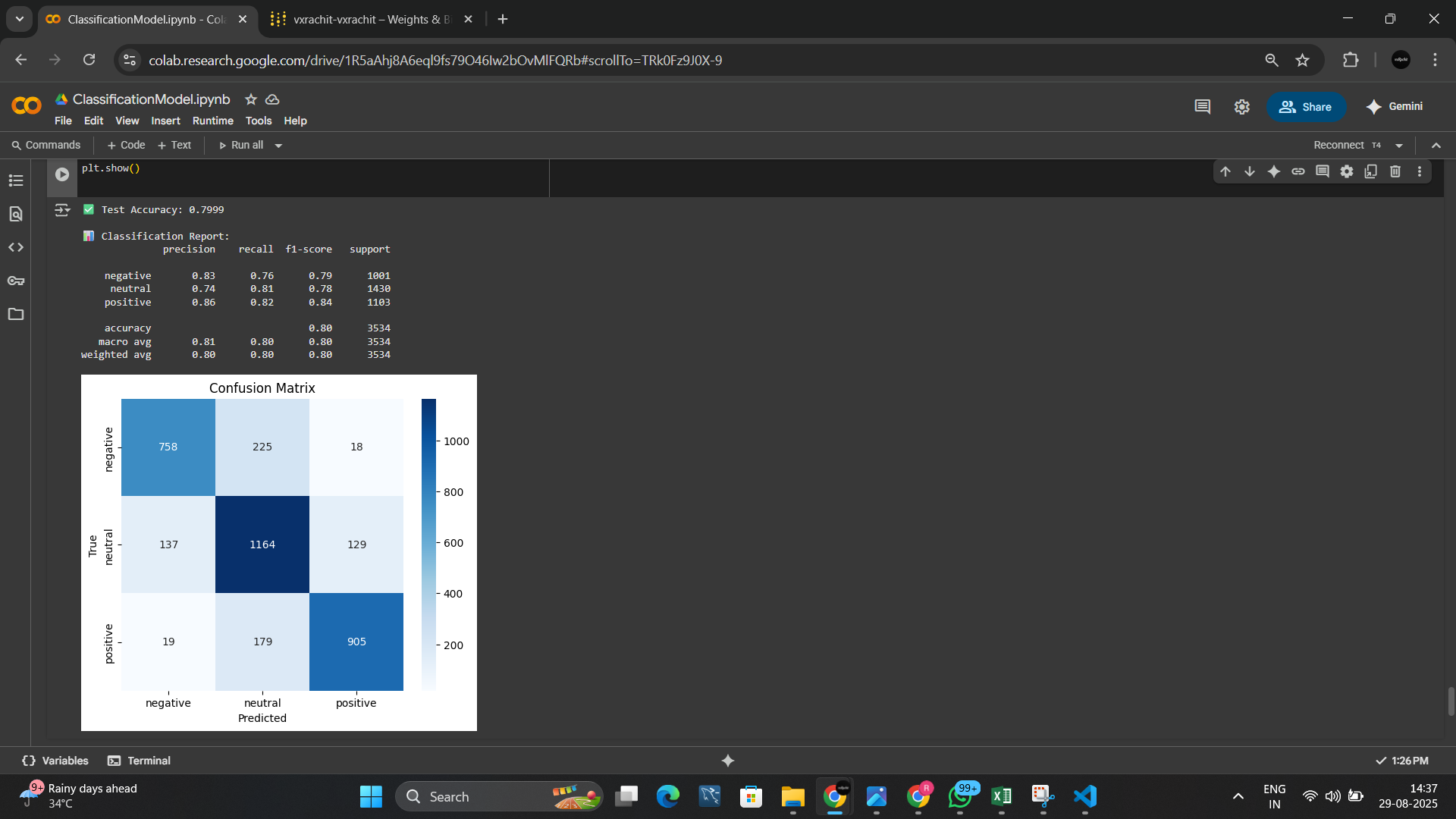
Testing & Performance
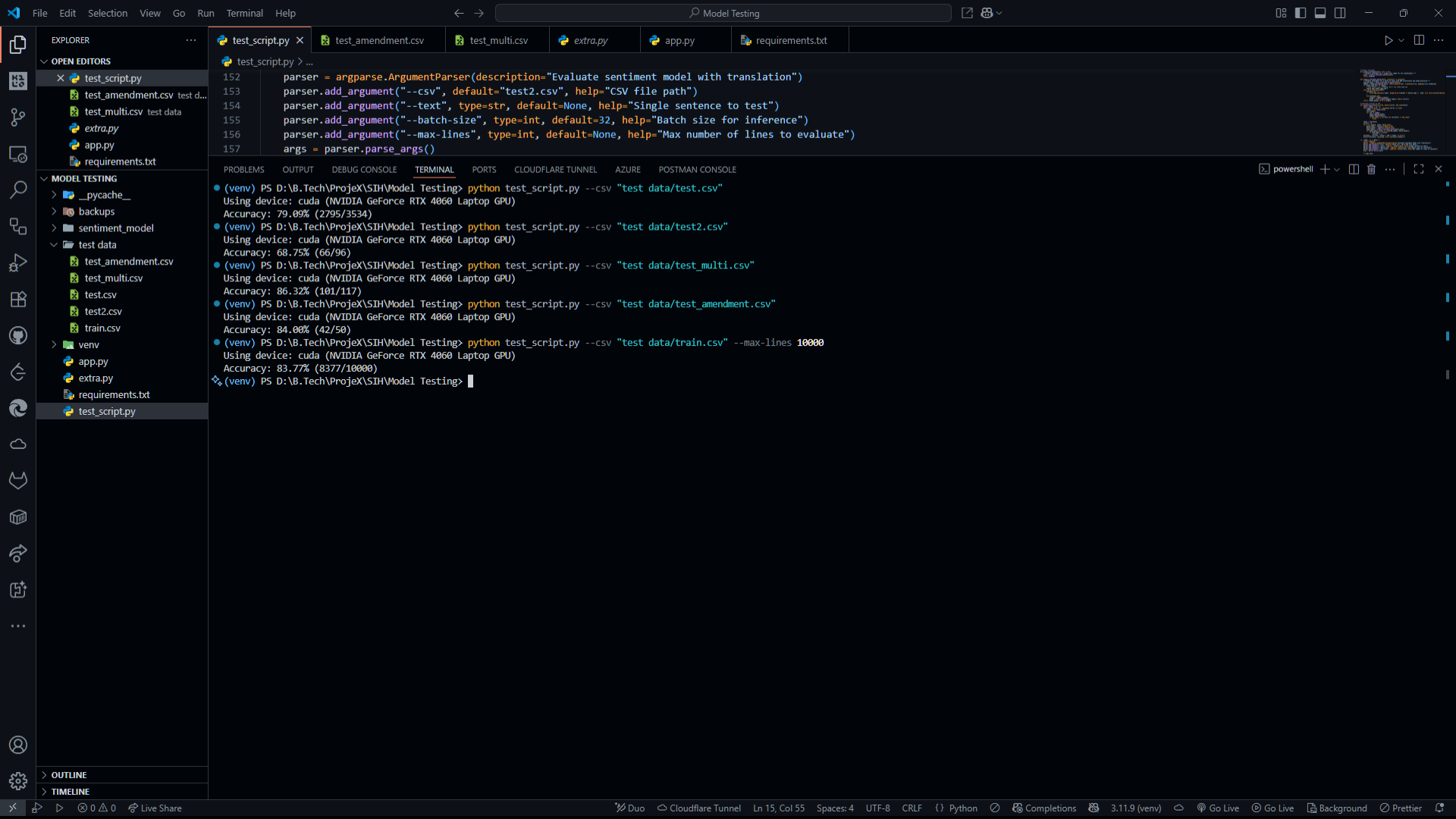
We maintain rigorous testing standards including unit tests for API endpoints and consistency checks for the ML models.
#
Model Evaluation
#
Test Coverage